
 The adult fungus gnat can lay about three hundred eggs in its short lifespan, about two weeks, unless you’re lucky enough to smash one. (PETA people, forget it. Even you would find them annoying). Eggs are laid in fertile, moist soil at the base of plants and turn into larvae, rapidly increasing in size as they munch through organic matter in soil.
A root drench with one part hydrogen peroxide and four parts water (you have to wait until the mixture runs all the way through the plant and out the drainage hole) is best rather than spraying the plants with insecticide because it rids the problem. You’ll have to put up with the gnats for two weeks longer if they’ve already hatched.
Two weeks ago, there was an infestation before I read about the hydrogen peroxide mixture. So the African Violets and the poinsettia plants, which are very susceptible to fungus gnat damage, didn’t succeed. But so far, the other plants came through the process.
So for a week thereafter, I wore a surgical mask 24/7 to keep the fungus gnats from being sucked up into my nose. But I have a few more orifices, like my ears and eyes, for example, and I used appropriate rinses in them, too.

Sandy, they probably are. From emails I received, they are everywhere!
This is definitely disturbing. I have been visiting my daughter because I live with my son but he has shingles right now. I think those knats are in my building.
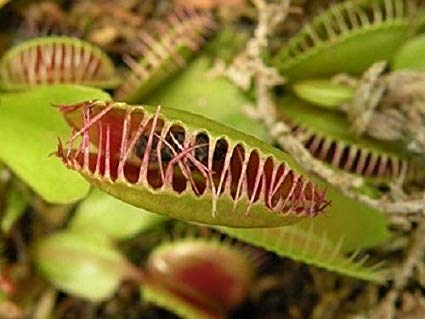
That Venus flytrap looks up to the task, though.
OMG. Only having one good hand myself makes this story especially disturbing.